
Categories
buyer resources, home buying tips, home selling tips, huntsville real estate market, Huntsville real estate tips, market trends, Seller Tips, Tips & Things to KnowPublished September 2, 2026
Real Estate ROI in Huntsville: What Bedroom Count, Size and Age Actually Resell (2026 Data)

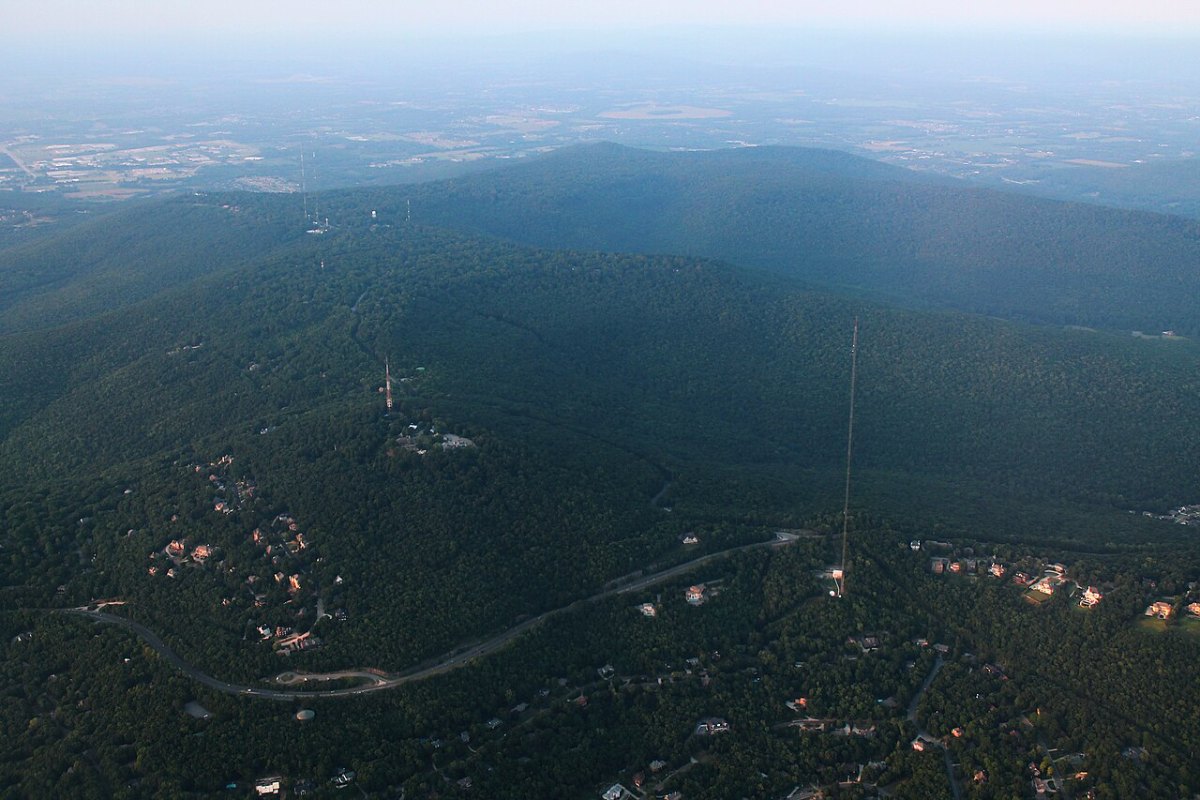
Most people buy a house by asking "can we see ourselves living here?" That is the right question emotionally and the wrong one financially. The families who come out ahead in Huntsville ask a second one at the same time: who buys this house from me, and what will they pay?
That is what "begin with the end in mind" means in real estate. You are not just buying a place to live. You are buying a position you will eventually have to exit, in a market with real transaction costs, to a buyer whose preferences are already measurable today. This guide is the data on those preferences — bedroom count, bathroom count, square footage and age — and what each one does to your return.
The short version
Your exit date decides more than your purchase price. Zillow puts the national rent-versus-buy break-even at 6 years as of June 2026, down from a peak of 8.4 in late 2023. Birmingham, the closest Alabama metro in the study, comes in at 5.1 years. Under that horizon, transaction costs eat the appreciation.
Buyers are staying put longer than ever. The median seller in 2025 had owned for 11 years — a record — and today’s buyers expect to stay 15.
The center of the market is a 3-bedroom, 2-bath, ~1,900 sq ft home built in the 1990s. That is the national median home purchased, and it is very close to Huntsville’s. The closer you sit to that profile, the larger the pool of people who can buy your house later.
Buy the bathroom, do not build it. Adding a bathroom recoups roughly 53–59% of its cost in our region. Buying a house that already has it costs you nothing at resale.
Age is the variable buyers underestimate. Homes built before 1980 hit new owners with about $3,200 in unexpected first-year repairs — roughly 4x what a 2020s build does.

Start with the only number that matters: your exit
Before bedrooms, before square footage, before neighborhoods — there is one calculation that decides whether a purchase works. How long will you own it?
The reason is arithmetic. Buying and selling a house both cost real money, and those costs are front-loaded. You pay them whether the market goes up or down. Appreciation has to cover them before you are even.
What it actually costs to get in and back out
| Cost | When | Typical range | On a $353,000 Huntsville home |
|---|---|---|---|
| Buyer closing costs | At purchase | 2–5% of price | $7,000 – $17,700 |
| Real estate commission | At sale | Negotiable — commonly 5–6% total | $17,700 – $21,200 |
| Seller closing costs | At sale | 1–3% | $3,500 – $10,600 |
| Buyer concessions | At sale | 0–3% in a balanced market | $0 – $10,600 |
| Round trip | ~8–15% | $28,000 – $60,000 |
At Huntsville’s recent appreciation pace, that round trip takes years to earn back. That is not an argument against buying — it is an argument for being honest about your timeline before you write an offer. A three-year assignment at Redstone and a 15-year plan are different purchases, even at the same price.
The break-even horizon, by metro
Memphis, TN
4.2 yrs
Louisville, KY
4.8 yrs
Birmingham, AL
5.1 yrs
Jacksonville, FL
5.4 yrs
Atlanta, GA
5.5 yrs
Charlotte, NC
5.9 yrs
United States
6.0 yrs
Houston, TX
6.3 yrs
San Antonio, TX
7.7 yrs
Nashville, TN
8.8 yrs
Years of ownership before buying beats renting. Zillow, June 2026. Huntsville is not among the 50 largest metros Zillow modeled; Birmingham is the closest Alabama comparison. Alabama’s low property taxes and Huntsville’s below-average price point both push the local number toward the shorter end.
The single most useful question I ask buyers
"If you had to sell this house in four years, who buys it?" If the answer comes easily — a Redstone engineer, a Madison family chasing schools, a nurse near the hospital — the house has a market under it. If the answer is "someone exactly like us," that is a narrower exit than it feels like on a Saturday tour.
Already own? Start with what your home is worth today — you cannot plan an exit you have not priced.
What the Huntsville market actually did over the last 24 months
Numbers first, interpretation second. Here is what actually closed.
13,004
Closed single-family sales
Madison County, Aug 2024 – Jul 2026
$335,000
Median sold price
Same 24-month window
21 days
Median days on market
Average was 52 — the gap matters
$5.0B
Total sales volume
Two years of single-family closings
Aggregated from Valley MLS closed-sales records for Madison County single-family homes, closed dates 08/01/2024 through 07/31/2026, compiled by Team Nemec at Capstone Realty. Aggregate statistics only; no individual listing data is reproduced.
Two things in that box deserve a second look.
The median sale took 21 days. The average took 52. When an average runs more than double the median, it means a minority of homes are sitting for a very long time and dragging the mean up. Most Huntsville houses sell quickly. A meaningful tail does not. Which group your house lands in is largely decided by the variables in this article.
Median sold price was $335,000 across the full two years, while the Huntsville Area Association of REALTORS reported a median of $353,084 for May 2026 alone — up 2.3% year over year. The two-year figure is lower because it includes 2024 and 2025 closings. Prices have moved up, modestly.
Three different "median home prices," and why they disagree
| Source | Figure | What it measures |
|---|---|---|
| Team Nemec / Valley MLS | $335,000 | Median sold price of single-family homes that actually closed, Aug 2024 – Jul 2026 |
| HAAR, May 2026 | $353,084 | Median sold price for one recent month only — more current, smaller sample |
| Zillow Home Value Index, Jul 2026 | $290,453 | Estimated value of a typical home in the city, whether or not it sold |
The rest of the picture as of mid-2026: 3.8 months of supply (down 5% year over year), homes receiving 98.9% of list price, and 2,191 homes in inventory. Zillow clocks median days to pending at 19 and reports 17.5% of sales closing above list while 53.9% close below. That is a balanced-to-slightly-soft market — not the frenzy of 2021, not a downturn.
The long view, which is the one that matters for ROI
The federal government has tracked Huntsville-area home prices since 1984. The FHFA All-Transactions Index for the Huntsville metro sat at 324.85 in the first quarter of 2026, against a baseline of 100 in early 1995. Prices here have roughly tripled in thirty years.
The index peaked at 326.72 in October 2025 and has drifted very slightly since. Read that as the market catching its breath after an extraordinary run — not as a signal to wait. Nobody times a thirty-year trend.

Bedroom count: where the buyers actually are
The national median home purchased in 2025 had three bedrooms, two bathrooms and about 1,900 square feet, and was built in 1994. That is not a coincidence or an average of extremes. It is where the largest number of buyers and the largest number of sellers meet.
For ROI purposes, bedroom count is really a question about the size of your future buyer pool. Every bedroom you add or subtract changes who can consider your house.
| Bedrooms | Who buys it in Huntsville | Buyer pool | Resale outlook |
|---|---|---|---|
| 2 | Singles, couples without children, downsizers, investors targeting rentals | Narrow | Hardest resale of the four. Strong price per square foot, weak total appreciation. Works as a rental, works as a first purchase you plan to keep and lease. |
| 3 | First-time buyers, small families, military and civil service transfers, retirees, investors | Widest by far | The safest position in the market. Nearly every buyer type can consider a well-kept 3-bedroom. |
| 4 | Families with children, dual-income households, people who need a home office | Wide | Strong. The fourth bedroom has become a home office as much as a child’s room, which broadened this segment permanently after 2020. |
| 5+ | Large or multigenerational families, high earners, executive relocations | Narrow | Longest days on market. Excellent when the local employer mix supports it — and Huntsville’s does better than most metros this size — but you are selling to a smaller room. |
The practical rule
Three bedrooms is the floor. Four is the sweet spot in most of Madison County. Going from three to four widens your exit; going from four to five narrows it again. Unless you have a specific reason to need five — and plenty of Huntsville families genuinely do — the fifth bedroom is a lifestyle purchase, not an investment one. Price it that way in your head.
The exception worth knowing
A 3-bedroom with a genuine flex space — a bonus room over the garage, a finished basement room, a real office with a door — often competes directly with 4-bedroom listings while costing less. In neighborhoods like Hampton Cove and Clift Farm, that configuration is the quiet value play.

Bathrooms: the highest-leverage number in the house
If bedroom count sets the size of your buyer pool, bathroom count decides how many of those buyers will actually write an offer. And unlike bedrooms, bathrooms are brutally expensive to add later.
| Baths | Effect on resale | What it costs to get there afterward |
|---|---|---|
| 1.0 | Screens out most families outright. Common in Huntsville’s 1950s–60s stock. | Adding a full bath: $54,000–$61,000 regionally |
| 1.5 | Better, but still a compromise for households of three or more. | Converting half to full: highly variable; plumbing decides it |
| 2.0 | The functional minimum for a family home. Matches the national median. | — |
| 2.5 | Noticeably easier sale. The half bath removes a real objection for guests and main-level living. | — |
| 3.0+ | Strong on 4+ bedroom homes. Largely wasted on a 3-bedroom. | — |
The most valuable sentence in this article
Buy the bathroom. Do not build it. A midrange bathroom addition recoups roughly 53–59% of its cost in our region, and an upscale one recoups 36–42%. You are lighting $25,000 to $60,000 on fire for the privilege of having what you could have bought at closing.
That gap — paying full freight for something you could have purchased at market price — is the single largest avoidable ROI mistake I see. Stretch at purchase for the bath count you will need in year seven.
Square footage: the price-per-foot curve nobody explains
Here is a fact that surprises almost every buyer: smaller homes sell for more per square foot than larger ones. Not less. More.
The reason is that a house is not priced by the foot. It is priced as a bundle — a lot, a kitchen, a roof, a set of bathrooms, a location — and those fixed components are spread across whatever square footage happens to be there. A 1,400 sq ft home and a 3,000 sq ft home in the same subdivision both have one kitchen and one front door. The smaller one carries those costs across fewer feet, so its price per foot runs higher.
This has a direct consequence for your return: the marginal square foot is worth less than the average square foot. Paying up for size is the weakest dollar you can spend in a house.
What the national data shows
- New homes in the South averaged 2,608 square feet at $155.10 per square foot as of the most recent decade-long study — and Southern new-home size shrank 3.3% over that period.
- Nationally, new-home size fell about 1% while price per square foot rose 95.1%. Builders responded to affordability by shrinking the box, not discounting the foot.
- The 2025 national median home purchased was 1,900 square feet — well under what new construction delivers. Most buyers are not buying the biggest house available to them.
The biggest-house-on-the-block trap
Appraisers and buyers both anchor to the neighborhood. If your house is 3,400 square feet on a street of 2,200 square foot homes, you do not capture the full value of the extra 1,200 feet — the comparable sales around you cap what an appraiser can support, and buyers shopping that street are not shopping that price.
The reverse is the actual opportunity: a modest house in a strong neighborhood outperforms a large house in a weak one. Location sets your ceiling. Square footage only determines where under that ceiling you sit.
The Huntsville sweet spot
Pull it together and the resilient band in Madison County runs roughly 1,700 to 2,600 square feet. Below 1,500 you are competing with rentals and starter inventory and losing family buyers. Above about 3,000 the buyer pool thins noticeably and days on market stretch — which is precisely where that 52-day average comes from.
If you are choosing between a 2,900 sq ft home in a fringe subdivision and a 2,100 sq ft home in Jones Valley, Village of Providence or a strong Madison school zone, the smaller house in the better location is usually the better position. That is not a matter of taste. It is what the comparable sales will support in year seven.

Not sure which areas fit you? The Home Finder quiz matches you to Huntsville and Madison neighborhoods by how you actually live — commute, schools, budget — instead of making you guess from a map.
Age: the ROI variable buyers underestimate
Bedroom count and square footage are on every listing. Age is too — and almost nobody prices it correctly.
The national median home purchased in 2025 was built in 1994. That is roughly thirty years old, and thirty is a meaningful number: it is about when the original roof, HVAC, water heater and often the windows all reach end of life at the same time.
Unexpected first-year repair costs, by the decade the house was built
Built before 1980
$3,200
Built 1980s–1990s
$2,100
Built 2000s–2010s
$1,200
Built 2020s
$800
Median unexpected repair spending in a new owner’s first year. Pearl Certification, 2026, drawing on the American Housing Survey and Bankrate’s hidden-costs research. Pre-1980 homes cost roughly four times what a 2020s build does.
National average annual maintenance now runs about $8,808, and about $21,400 once you add property taxes, insurance and utilities. Alabama helps enormously on the tax line — a $400,000 Huntsville home runs roughly $2,320 a year, a fraction of what the same house costs in Virginia or Colorado — but the maintenance line does not care what state you are in. It cares how old your roof is.
Huntsville's housing stock, era by era
| Era | Where you find it | What you get | What it costs you | Resale outlook |
|---|---|---|---|---|
| Pre-1950 | Twickenham, Old Town, Five Points | Character, walkability, large lots, irreplaceable location | Highest maintenance. Historic district design review on exterior changes. Knob-and-tube and galvanized plumbing still turn up. | Strong — scarcity protects these. But budget like a landlord. |
| 1950s–1970s | Jones Valley, Blossomwood, much of south Huntsville | Big lots, mature trees, established schools, low price per foot | One-bath floor plans, original electrical panels, cast iron drains, aging HVAC. Often single-pane windows. | Good if updated, slow if not. The bath count is usually the binding constraint. |
| 1980s–1990s | Much of Madison, west Huntsville, Hampton Cove | The value sweet spot. Modern layouts, 3–4 beds, 2+ baths, real square footage | Systems are at or past end of life right now. Expect roof, HVAC and water heater within a few years. | Best all-around risk-adjusted position, if you buy with eyes open on systems. |
| 2000s–2010s | Providence, Edgewater, newer Madison | Open plans, good insulation, low near-term repair risk | Higher price per foot. Smaller lots. HOA and architectural review common. | Solid. Predictable. Fewer surprises, fewer bargains. |
| 2015–present | Clift Farm, Hays Farm, Town Madison, north Huntsville corridors | Warranties, current codes, energy efficiency, amenities | You compete with the builder’s next phase when you resell. New inventory next door caps your price. | Weakest near-term resale, strongest long-term hold. Do not buy new planning a 3-year exit. |
The age rule I actually use
Buy a house that is either young enough to have no deferred maintenance, or old enough that the previous owner already replaced the expensive things. The dangerous zone is a 20-to-30-year-old home with all original systems — it looks move-in ready and is about to hand you $20,000 in bills.
On any home over fifteen years old, ask for the age of the roof, HVAC, water heater and electrical panel in writing before you remove your inspection contingency. Four questions. They will tell you more about your first three years of ownership than the granite will.
More on this: what actually shows up in Huntsville home inspections, and why yard slope and drainage deserve your attention here.
The renovation return table: buy the improvements, do not make them
Every year, the industry surveys what remodeling projects cost and what they return at resale, broken out by region. Below is the East South Central data — the region that includes Alabama. This is the closest thing to hard evidence you will find on what upgrades actually pay.
Garage door replacement
210.6%
Entry door replacement (steel)
186%
Manufactured stone veneer
128.4%
Minor kitchen remodel (midrange)
104.7%
Backup power generator
95.3%
Siding replacement (fiber-cement)
94.4%
Bath remodel (midrange)
80%
Siding replacement (vinyl)
77.3%
HVAC electrification
72.1%
Deck addition (wood)
71.2%
Window replacement (vinyl)
70.4%
Roofing replacement (asphalt)
67.5%
Percent of project cost recouped at resale, East South Central region (includes Alabama). The vertical line marks 100% — the point where you get your money back. Bold bars clear it. Figures are the conservative end of the reported range; Cost vs. Value, 2025 report, via the Journal of Light Construction.
And the projects that do not pay
| Project | Regional job cost | Cost recouped |
|---|---|---|
| Window replacement (wood) | $25,400–$26,800 | 62.6% |
| Bathroom addition (midrange) | $54,000–$60,600 | 53.3% |
| Major kitchen remodel (midrange) | $77,900–$82,800 | 50.9% |
| Accessory dwelling unit | $145,500–$166,400 | 41.3% |
| Bath remodel (upscale) | $75,700–$81,600 | 41.7% |
| Bathroom addition (upscale) | $100,400–$111,300 | 36.4% |
| Major kitchen remodel (upscale) | $153,100–$164,100 | 35.7% |
| Primary suite addition (midrange) | $150,300–$170,500 | 32.3% |
| Solar power installation | $47,800–$55,900 | 29.7% |
| Backyard patio | $49,100–$51,500 | 23.7% |
| Primary suite addition (upscale) | $308,600–$351,600 | 18.0% |
The pattern in one line
Curb appeal and small replacements pay. Additions and luxury finishes do not. Everything above 100% is something a buyer sees in the first eight seconds from the driveway. Everything below 50% is something they take for granted once they are inside.
Which is exactly why buying the right house beats renovating the wrong one. A fourth bedroom costs a builder $40 a foot to frame and costs you $170 a foot to add later.

The Huntsville ROI scorecard: how to grade a house before you offer
Run any listing through these ten questions. Not every house needs a perfect score — but you should know exactly which points you are giving up and why.
- Does it have at least 3 bedrooms and 2 full baths? Below this you have structurally narrowed your exit.
- Is it between roughly 1,700 and 2,600 square feet? Inside the band, your buyer pool is deepest.
- Is it the middle of the street, not the top? Compare it to the last five sales within a quarter mile. If it is the priciest, you are capped.
- How old are the roof, HVAC, water heater and panel? Ages in writing, not "recently updated."
- What school zone — and is that zone stable? Huntsville City, Madison City and Madison County systems price very differently, and rezonings happen.
- What is the realistic commute to your gate or office? Twenty minutes is a feature. Forty-five is a discount you pay at resale.
- Does the lot drain away from the house? Our clay soil and summer downpours make this expensive to fix and easy to check.
- Is there new construction actively selling within a mile? If yes, the builder sets your ceiling until that phase sells out.
- Would this rent for enough to cover the note if you had to move suddenly? PCS orders and layoffs do not check your equity position first.
- Can you name the buyer who takes it off your hands in year five? If you cannot, the rest of the list does not matter.
Send me an address. I will send you the resale case.
Text me any listing you are considering — MLS number or just the address — and I will send back what comparable homes in that pocket have actually sold for, how long they took, where the house sits in the price-per-foot band, and the honest read on who buys it from you later. No charge, no obligation, and I will tell you when the answer is walk away.
Get the resale read on a house →
Ben Nemec · Associate Broker · Team Nemec at Capstone Realty
For sellers: how to be the house the ROI buyer picks
Everything above is a buyer's checklist. Flip it and it becomes your listing strategy, because the buyer walking your house in 2026 is running some version of it — consciously or not.
Fix, in this order
- The eight-second exterior. Garage door, front door, mailbox, house numbers, edged beds, pressure-washed drive. The Cost vs. Value data is unambiguous: this is where the returns above 100% live.
- Anything that reads as deferred maintenance. A stained ceiling, a soft deck board, a cracked drive apron. Buyers do not price these repairs — they price their fear of these repairs, and the fear always costs more.
- Documentation of the big four. Roof, HVAC, water heater and electrical panel — ages, receipts, warranties, in a folder on the counter. This is the cheapest trust you will ever buy.
- Paint, in current colors. Cheapest square footage on the property. Our 2026 paint color guide covers what is actually landing with buyers now.
- Light and function in the flex space. If a bonus room can read as a home office, stage it that way. You are competing for the 4-bedroom buyer without owning a fourth bedroom.
Do not fix
- Major kitchen remodels. You recoup about half, and you will guess wrong on finishes.
- Bathroom or bedroom additions to "match the comps." You will spend $55,000 to gain $30,000.
- Upscale anything, if your neighborhood is not upscale. The street caps you.
- Solar, if the motive is resale. Under 30% recouped regionally. Install it because you want it.

Price to the band, not to the wish
Homes here received 98.9% of list price in May 2026 and the median sale went pending in about three weeks — but the average sat 52 days. That spread is almost entirely a pricing story. A home priced inside its price-per-square-foot band for its size, age and school zone sells in the median. One priced on hope sells in the average, after two reductions, for less than the correct number would have brought on day one.
The seller question that mirrors the buyer question
Buyers ask "who buys this from me in five years?" You should ask "which buyer am I listing this for, and does my house actually serve them?" A 4-bed, 2.5-bath in a Madison City school zone is a family home — so the office should read as a bedroom, not a gym. A 2-bed near the hospital is an investor and first-timer play — so lead with the rent comps and the low maintenance, not the breakfast nook.
Thinking about selling? Get a current value on your home, then send me a note and I will walk your specific house through the fix-list above and tell you which items are worth the money on your street.
Frequently asked questions
What bedroom count has the best resale value?
Three bedrooms gives you the widest possible buyer pool and four is the strongest all-around position in most of Madison County. The 2025 national median home purchased had three bedrooms, and nearly every buyer type — first-timers, families, transfers, retirees, investors — can consider a well-kept three-bedroom. Five or more bedrooms narrows your exit and typically means longer days on market, though Huntsville supports large homes better than most metros its size because of the employer mix.
What size home sells best in Huntsville?
Roughly 1,700 to 2,600 square feet is the resilient band in Madison County. Below about 1,500 you compete with rentals and lose family buyers; above about 3,000 the buyer pool thins and days on market stretch. The national median home purchased in 2025 was 1,900 square feet, which sits right in the middle of that range.
Do smaller homes really sell for more per square foot?
Yes, consistently. A house is priced as a bundle — one lot, one kitchen, one roof, one front door — and those fixed costs get spread across whatever square footage exists. A smaller home spreads them across fewer feet, so its price per foot runs higher. The practical takeaway is that the marginal square foot is worth less than the average square foot, which makes paying up for raw size the weakest dollar in a purchase.
What is the best age of home to buy for ROI?
Homes built in the 1980s and 1990s tend to offer the best risk-adjusted position in Huntsville: modern layouts, three to four bedrooms, two or more baths and real square footage, at a lower price per foot than new construction. The catch is that their original systems are at or past end of life, so buy with roof, HVAC, water heater and panel ages in writing. Homes built before 1980 hit new owners with about $3,200 in unexpected first-year repairs, roughly four times what a 2020s build does.
How long do I need to own a home before it makes financial sense?
Zillow put the national rent-versus-buy break-even at six years as of June 2026, down from a peak of 8.4 years in late 2023. Birmingham, the closest Alabama metro in that study, came in at 5.1 years. Huntsville likely sits at the shorter end of that range because Alabama property taxes are low and local prices are below the national median. Under roughly five years, transaction costs of eight to fifteen percent of the sale price tend to eat the appreciation.
Which home improvements actually pay for themselves?
In the East South Central region, garage door replacement recoups about 211%, steel entry door replacement about 186%, manufactured stone veneer about 128%, and a minor midrange kitchen remodel about 105%. Everything that clears 100% is something a buyer sees in the first eight seconds from the driveway. Major kitchen remodels, bathroom additions and primary suite additions all recoup well under 60%.
Is it better to buy a house with an extra bathroom or add one later?
Buy it. A midrange bathroom addition recoups roughly 53 to 59 percent of its cost in our region and an upscale one recoups 36 to 42 percent, on a project that typically runs $54,000 to $111,000. Stretching at purchase for the bathroom count you will need in year seven is almost always cheaper than building it.
What is the median home price in Huntsville right now?
It depends which measure you mean. The Huntsville Area Association of REALTORS reported a median sold price of $353,084 for May 2026, up 2.3% year over year. Across the full 24 months from August 2024 through July 2026, the median sold price for Madison County single-family homes was $335,000 across 13,004 closings. Zillow’s Home Value Index, which estimates the typical home whether or not it sold, read $290,453 in July 2026. All three are correct and answer different questions.
Should I buy new construction in Huntsville if I care about resale?
Only if you plan to hold. New construction gives you warranties, current codes and low near-term repair risk, but when you resell you compete against the builder’s next phase, and new inventory next door caps your price. That makes it the weakest near-term resale and a strong long-term hold. Do not buy new planning a three-year exit.
How fast do homes sell in Huntsville?
The median Madison County single-family sale over the last two years went in 21 days, but the average took 52. That gap means most homes sell quickly while a meaningful minority sit for a long time. Which group a house lands in is driven mostly by pricing, condition and where it falls on the bedroom, size and age variables in this guide.
Keep reading
- The complete 2026 Huntsville buyer’s guide
- What each price range actually buys in 2026
- Top paint colors for 2026 and the best painters in Huntsville
- New construction: top builders and why you need your own agent
- Home inspections in Huntsville: what actually shows up
- The real Huntsville rental market — actual rent numbers
- Relocating to Huntsville — the full hub
- Browse every subdivision in the metro
Sources
Local closed-sales aggregates compiled by Team Nemec at Capstone Realty from Valley MLS records, Madison County single-family, closed 08/01/2024–07/31/2026 (aggregate statistics only). Monthly market figures: Huntsville Business Journal reporting on Huntsville Area Association of REALTORS data. Typical-home values: Zillow Home Value Index. Long-run prices: FHFA All-Transactions House Price Index, Huntsville MSA. Break-even horizon: Zillow rent-versus-buy analysis, June 2026. Buyer and seller profile: National Association of REALTORS 2025 Profile of Home Buyers and Sellers. Remodeling returns: Cost vs. Value 2025, East South Central, via the Journal of Light Construction. Maintenance and repair costs by home age: Pearl Certification 2026 Home Maintenance Cost Report. Home size and price per square foot: LendingTree new-home size study. Figures verified August 2026.
This post is general market education, not investment, tax, legal or lending advice. Ben Nemec is a licensed Alabama real estate professional, not a CPA, attorney, appraiser, contractor or financial adviser. Real estate returns are not guaranteed and past appreciation does not predict future results. Local statistics are aggregate figures compiled from Valley MLS closed-sales records and are presented for market-education purposes; individual listing data is not reproduced. Cost, ROI and break-even figures are third-party estimates and regional averages, not quotes or projections for any specific property. Real estate commissions are fully negotiable and are not set by law or by any association or MLS. Verify property tax treatment with the Madison County Tax Assessor, loan terms with a licensed lender, and school zoning with the applicable school system before relying on any of it. Team Nemec at Capstone Realty, Huntsville, Alabama. Equal Housing Opportunity.

Ben Nemec
Associate Broker | Team Leader | Team Nemec | Capstone Realty | PLACE
or another way